Merging Our People
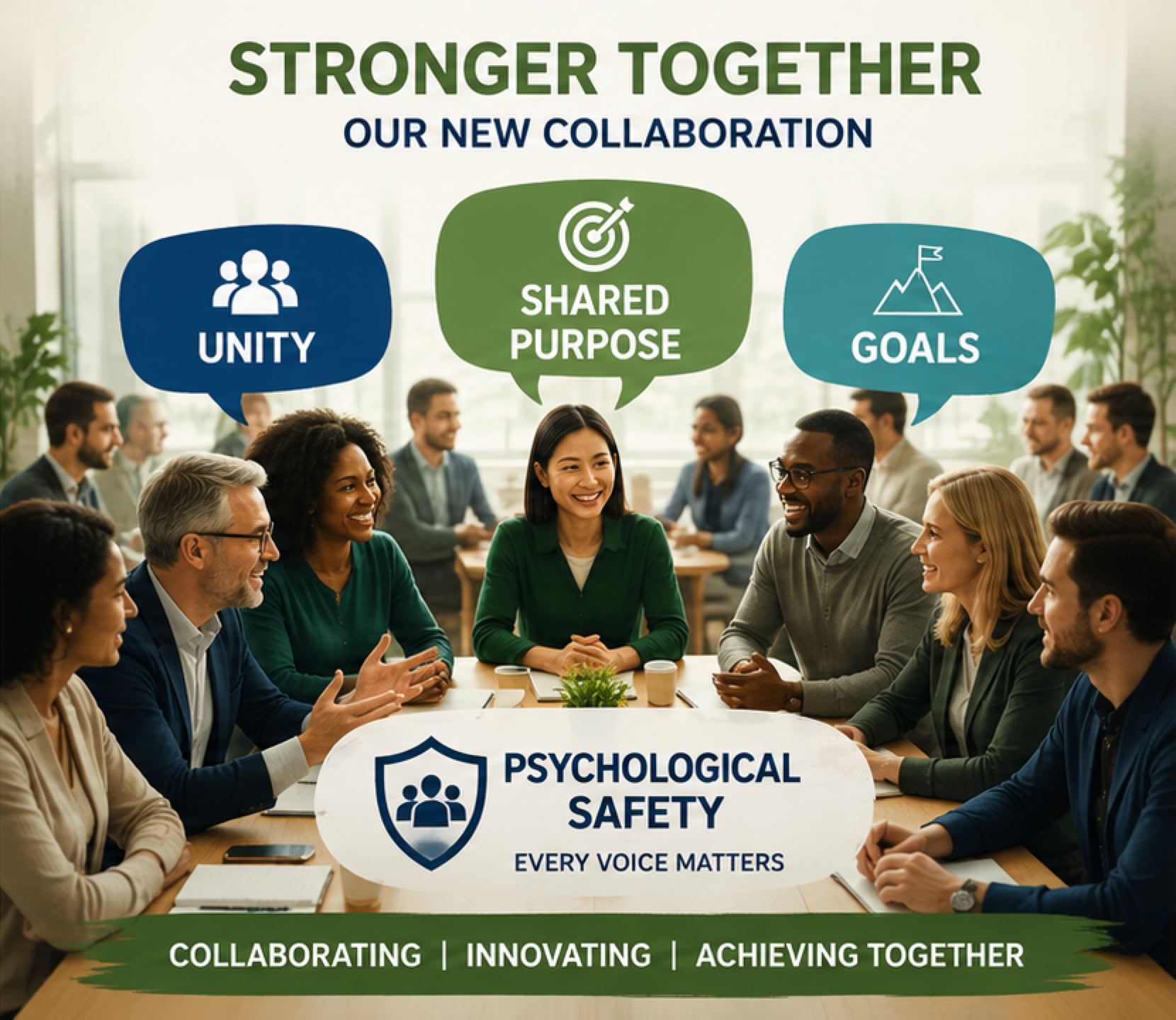
A bespoke programme in a neutral environment to help all senior leaders identify and discuss their concerns, pros and cons and the benefits of merging together as one new organisation through honest discussions.
We will lay out the foundations for how we will work together, addressing brought-over bias from the “us and them” mindset, and create the new organisation’s people charter to achieve our new phoenix effect.

Merging Our People Description
The word merger means:
“To combine or join two or more things to form a single, unified whole”. (Google search).
People and mergers:
A merger may be shaped by strategy, structure and numbers, but its success is ultimately decided by people.
Getting people right before, during and after the deal is critical to retaining talent, protecting trust, aligning cultures and sustaining performance when the organisation is at its most vulnerable.
When this is not done well, uncertainty deepens, key people disengage or leave, cultures fracture, momentum is lost, and the value the merger was meant to create can rapidly disappear.
Behind every merger are people deciding whether to trust, commit, stay and perform. If they are not supported before, during and after the deal, uncertainty can spread quickly, damaging confidence, culture, retention and the future the merger was meant to create.
I have facilitated merger programmes that focus on unifying mindsets across organisations as they gear up for a merger, during the merger, and for a good few months after the merger has been completed.
Data around people and mergers:
Statistics:
Statistics from organisations such as KPMG, McKinsey, Deloitte, and Harvard Business Review state that "50 to 90% of mergers fail" and "83% destroy shareholder value"; these figures circulate constantly in this subject. These are not academically peer-reviewed, but they are the numbers most people have heard of when researching the people-related challenges and impacts before, during, and after mergers.
The following are more academically robust, but access will probably still sit behind a paywall, since little is free these days.
- The most-cited meta-analysis in this field (745+ citations) confirms cultural differences are a consistent, reliable factor in whether a merger succeeds or fails. Stahl & Voigt, 2008, Organization Science.
- In controlled experiments, merging two group "cultures" measurably reduced performance, and people systematically blamed the other side rather than the structural culture clash itself. Weber & Camerer, 2003, Management Science.
- Elevated executive turnover in acquired companies is a well-documented, independently studied cost of poor human integration after a deal. Krug, 2003, Journal of Management and Governance.
- One of the earliest empirical studies of merger culture clash found that incompatible ways of working, not financial or strategic misalignment, was what actually undermined integration. Buono, Bowditch & Lewis, 1985, Human Relations.
I know, it may appear that I am using emotional blackmail, but I am not. I speak from experience and if you know me already, you’ll know that I speak as I find. There’s no point in anyone saying about the people side of a merger, " We’ll be fine, as “We” seldom are.
We, humans, are the most self-obsessed and self-destructive when it comes to agreeing on how best to work together in a unified and supportive manner during and even long after mergers. Truth be told, the “us and them” mindsets will already be noticeable in quiet chats and private messaging, as the conscious/unconscious accidental/purposeful saboteurs continue to cultivate and promote division to the attention and support of their peers. You’ll no doubt have heard such examples since the merger.
Included are ingredients and activities such as:
Where we are now activity?
What does our organisation currently do well? What are we proud of? What makes our organisation distinctive? What do our people value most? What do our customers/clients value about us? What are our strengths? What are our current challenges? What are we known for? What makes us successful? What would we like the other organisation to understand about us? (And more).
What can’t we lose activity?
Which traditions should we retain? Which values must survive? What behaviours make us who we are? What relationships are particularly important? What practices work exceptionally well? What should absolutely not be lost? What are we emotionally attached to? What makes people proud to work here? (And more).
What do we want to lose?
What doesn't work anymore? What processes create frustration? What behaviours should we stop? What assumptions hold us back? What bureaucracy could disappear? What have we tolerated simply because “that's how we've always done it”? (And more).
What are our differences right now?
Different organisational cultures, Different ways of working, Different terminology, Different expectations, Different leadership styles, Different decision-making processes, Different attitudes towards risk. (And more).
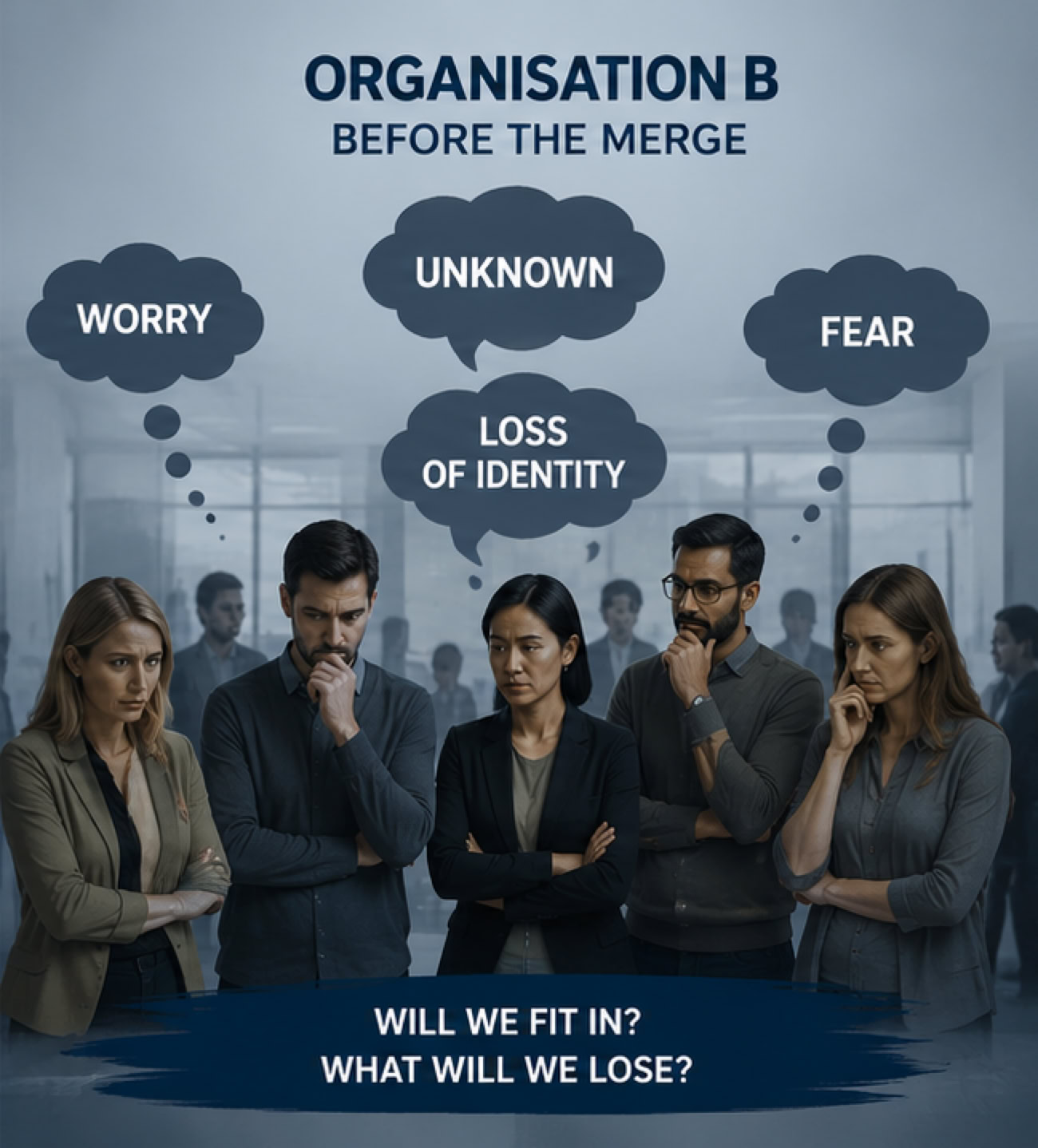
What are our worries, fears and uncertainties?
This is an explicit part of the workshop rather than something people are expected to suppress.
Job security? Changes to roles? Changes to responsibilities? Loss of status? Loss of identity? Loss of relationships? (And more).
What are our hopes and aspirations?
Balance the worries with an opportunity to imagine what could be achieved.
What could become possible? What could we achieve together that neither organisation could achieve alone? What opportunities could emerge? What could improve for customers?
There is so much more that we explore with you during these programmes, but all of it is ironed out in the consultancy discussions leading up to signing off and launching the programme. We can also combine the focus on merging with that on leadership and organisational culture to bring a more holistic approach that can be cascaded by those attending to their direct reports.
Who should attend?
Who Should Attend and Why?
Who? - ALL senior leadership roles in both organisations, including the two CEOs, their directors and senior leadership teams.
The numbers usually range from about 15 to 40 people. The venue for the event, along with transportation, accommodation, and meals, is booked by the participating organisation and is usually centrally located and accessible to most attendees. We will guide you on the requirements of the location.
Why? - Every person attending will be expected to cascade the outcomes and ensure that everything agreed on the programme is happening and in the way it should. They will make it abundantly clear to all about the responsibility, accountability, and consequences of not getting this right.
Our Delivery Options
We are confident that you will understand why this event must be held face-to-face. On one occasion, we managed to bring someone onto a Teams/Zoom call who didn’t want to attend in person due to the distance, but they said their experience lacked the personal “part of the team” feeling.
These events can be held at a location of your choice or, if you wish, at the Macdonald Burlington Hotel in Birmingham, located directly across from the Birmingham New Street train station. This is a hotel we have used for many of our programmes, courses and workshops.
All Expenses
All our expenses are included in our daily rate, so there will be no additional charges (this includes catch-up sessions for someone who misses a session).